Choosing a new roof in Virginia is a high-stakes decision. Our state’s geography—stretching from the salt spray of the Atlantic coast to the wind-whipped peaks of the Blue Ridge—creates a unique set of challenges for any building material.
When it comes time to replace your roof, you generally find yourself at a crossroads: Should you stick with the traditional asphalt shingles, or is it time to upgrade to a metal roofing system?
At Elevex Exteriors, we install both. We’ve seen how both materials perform during Richmond’s humid summers and Harrisonburg’s icy winters. In this definitive guide, we will compare metal roofs vs. shingles in Virginia across seven critical categories: cost, durability, energy efficiency, aesthetics, maintenance, ROI, and climate suitability.
If you are already leaning towards a lifetime solution, explore our Metal Roofing in Harrisonburg, VA page for specific local options.
1. The Virginia Climate Factor: How Materials Handle the “Old Dominion”
Before looking at prices, we must look at performance. Virginia falls into a “transition zone” for weather. We aren’t quite the North, and we aren’t quite the South.
Wind and Storm Resistance
Virginia is no stranger to high winds, whether from summer “derechos” or the remnants of Atlantic hurricanes.
- Asphalt Shingles: Standard shingles are typically rated for 110–130 mph winds. However, as they age and the adhesive strips dry out, their wind resistance drops significantly.
- Metal Roofing: Metal panels are often rated for winds exceeding 140 mph. Because they are mechanically fastened to the structure of the home, they are far less likely to “blow off” during a violent storm.
The Freeze-Thaw Cycle
In the Shenandoah Valley, we see a lot of “freeze-thaw” action. Water gets into small cracks, freezes (expanding), and then melts.
- Asphalt Shingles: This cycle is the primary cause of shingle cracking. The expansion of ice pries the granules loose and splits the matting.
- Metal Roofing: Metal is impervious to water penetration. It sheds snow and ice quickly (often sliding off in large sheets), preventing the “ice damming” that plagues many Virginia homes in January.
2. Cost Analysis: Upfront vs. Long-Term Value
This is the most significant point of contention for most homeowners. When discussing the best roofing material for the VA climate, you have to balance your current budget with your long-term goals.
Upfront Investment
There is no sugarcoating it: Metal roofing costs more upfront.
- Asphalt Shingles: The most budget-friendly option. A typical 2,000 sq. ft. home in Virginia might cost $10,000 – $15,000 for a high-quality architectural shingle installation.
- Metal Roofing: A standing-seam metal roof for that same home could range from $25,000 – $40,000.
The “Cost Per Year” Metric
If you plan to live in your home for 30+ years, the math changes.
- An asphalt roof lasts roughly 20 years in Virginia. Over 60 years, you will pay for three roofs.
- A metal roof lasts 50–70 years. Over 60 years, you pay for one roof.
When you factor in inflation and rising labor costs, the metal roof often becomes the cheaper option over the life of the home.
3. Energy Efficiency and “Cool Roof” Technology
Virginia summers are notoriously brutal. Our high humidity keeps the heat trapped against your home, sending AC bills through the roof—literally.
Reflectivity vs. Absorption
- Asphalt Shingles: Asphalt is a “thermal mass.” It absorbs solar heat and holds onto it long after the sun goes down. This heat radiates into your attic, making your upstairs bedrooms uncomfortable.
- Metal Roofing: Metal is naturally reflective. Modern metal roofs are coated with “cool roof” pigments that reflect up to 70% of solar energy.
Pro Tip: Homeowners in Harrisonburg who switch from dark asphalt shingles to a light-colored metal roof often report a 20% reduction in cooling costs during the peak of summer.
4. Aesthetics: Curb Appeal in VA Neighborhoods
The “look” of your home matters, especially in historic or deed-restricted communities in Virginia.
Asphalt Shingles: The Versatile Classic
Modern architectural shingles (also called dimensional shingles) can mimic the look of wood shakes or slate. They fit perfectly into the suburban aesthetic of neighborhoods from Roanoke to Alexandria.
Metal Roofing: The Modern Farmhouse Trend
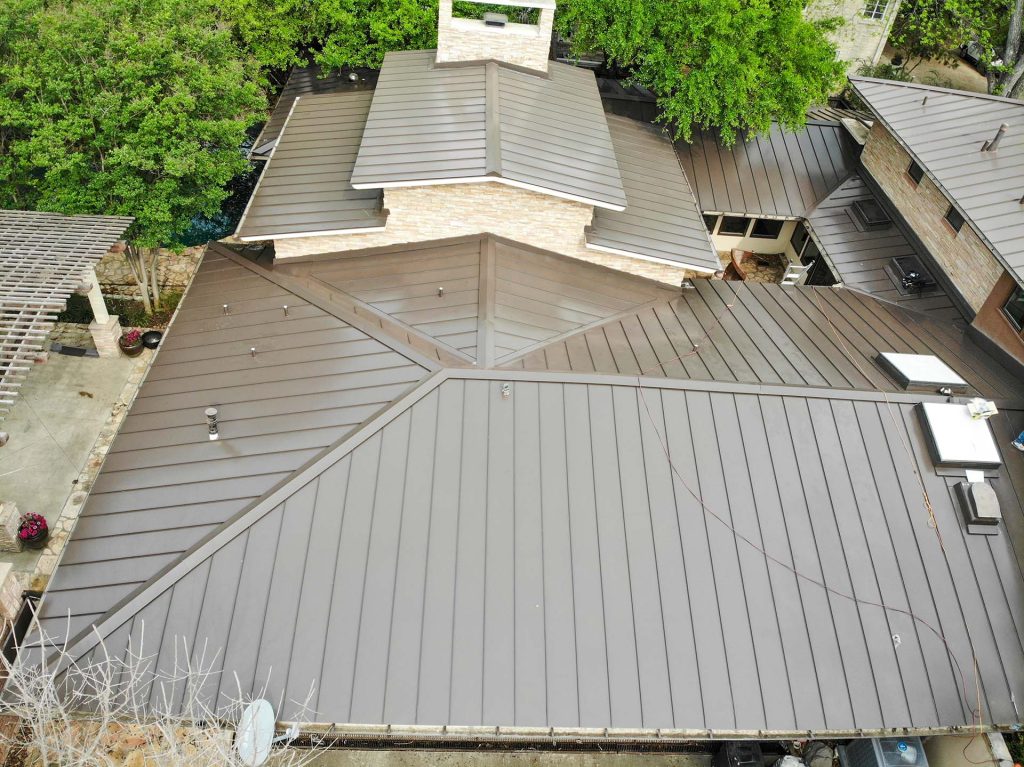
Metal isn’t just for barns anymore. The “Modern Farmhouse” trend has made standing-seam metal roofs highly desirable in Virginia. They provide clean, vertical lines that make a home look taller and more modern.
5. Maintenance and Lifespan
How much work do you want to do on your weekends?
- Asphalt Shingles: Require periodic inspections for moss, algae, and loose granules. In Virginia’s damp climate, you may need to professionally clean your shingles every 5 years to prevent “black streaks.”
- Metal Roofing: Virtually maintenance-free. An occasional rinse with a hose to remove pollen or debris is usually all that’s needed.
6. Environmental Impact
If sustainability is a priority for your household, the choice is clear.
- Asphalt Shingles: Most asphalt shingles end up in Virginia landfills. They are a petroleum-based product, making them difficult to recycle.
- Metal Roofing: Most metal roofs are made from 25–95% recycled content and are 100% recyclable at the end of their long life. Furthermore, they can often be installed over existing shingles, reducing construction waste.
7. The Verdict: Which is Best for Your Virginia Home?
The “better” roof depends on your specific situation:
Choose Asphalt Shingles if:
- You are planning to sell your home within the next 5–10 years.
- You are working with a strict upfront budget.
- Your HOA has specific requirements for shingle-only roofs.
Choose Metal Roofing if:
- This is your “forever home.”
- You want to maximize your home’s energy efficiency.
- You want the highest possible protection against Virginia’s severe weather.
- You are interested in the modern aesthetic of Metal Roofing in Harrisonburg, VA.
Choose Asphalt Shingles if:
- You are planning to sell your home within the next 5–10 years.
- You are working with a strict upfront budget.
- Your HOA has specific requirements for shingle-only roofs.
8. The Physics of Roofing: Thermal Performance in the Shenandoah Valley
To understand which is better for a VA home, we have to look at Thermal Emissivity and Solar Reflectance Index (SRI). Virginia is known for “Heat Islands,” especially in growing areas like Harrisonburg.
How Asphalt Shingles Trap Heat
Asphalt is a petroleum-based product. It acts as a thermal sponge. During a typical July day in Virginia, where temperatures hit 95°F, an asphalt roof can reach surface temperatures of 160°F or higher.
- The Radiation Effect: This heat doesn’t stay on the surface. It radiates downward into the roof decking, through the insulation, and into your living space.
- The “Nighttime Bleed”: Even after the sun sets, asphalt shingles continue to dump heat into your home for hours, forcing your AC to run late into the night.
The Metal “Cool Roof” Advantage
Metal roofing has high thermal emissivity, meaning it gives off heat quickly rather than storing it.
- Reflective Coatings: Most metal roofs used by Elevex Exteriors are treated with Kynar 500 or Hylar 5000 resins. These are “cool roof” pigments that reflect the infrared spectrum of sunlight.
- The Air Gap: When we install Metal Roofing in Harrisonburg, VA, we often use a “batten” system or a ventilated ridge that creates an air gap. This acts as a thermal break, ensuring that even if the metal gets warm, that heat never touches your home’s structure.
9. The Installation Masterclass: Why “Who” Installs It Matters More Than “What”
In Virginia, a roof is only as good as its installer. The state’s high humidity means that a single mistake in ventilation or flashing can lead to catastrophic mold growth within 24 months.
The Asphalt Shingle Process
- Tear-off & Deck Inspection: We remove every old layer. In Virginia, we look specifically for “delamination” of plywood caused by our humid summers.
- Drip Edge & Ice/Water Shield: Vital for VA winters. We install 6 feet of protection up from the eaves to prevent ice dams.
- The “Starter” Course: Crucial for wind resistance against Virginia’s summer “derechos.”
- Ventilation Syncing: We ensure your soffit vents and ridge vents are balanced to “flush” the attic air 10 times per hour.
The Metal Roofing Process (Standing Seam)
Installing metal is an architectural craft. Unlike shingles, which are nailed down, standing seam metal is mechanically seamed.
- Synthetic Underlayment: We use high-temp underlayment that won’t stick to the metal as it expands and contracts.
- Concealed Fasteners: We use clips that allow the metal to “slide” as it heats up and cools down. This prevents the “oil canning” or wavy look seen on cheap metal roofs.
- Z-Flashing and Ridge Details: We custom-bend metal on-site to fit the unique gables and dormers common in Virginia’s colonial-style homes.
FAQ
Q: Is a metal roof noisier during Virginia rainstorms? A: This is a common myth. When installed over solid wood decking and high-quality insulation (standard for Elevex), a metal roof is no louder than an asphalt roof. The “pinging” sound people remember is from old barns with no ceilings or insulation.
Q: Does a metal roof attract lightning in the Blue Ridge Mountains? A: No. Lightning seeks the highest point, not necessarily metal. Because metal is non-combustible and a conductor, if your house were hit, it is actually safer because the metal would dissipate the energy and won’t catch fire like asphalt shingles might.
Q: Can I install solar panels on both? A: Yes, but metal is superior for solar. With a standing seam roof, solar panels can be “clamped” to the ribs, meaning zero penetrations (no holes) in your roof. For asphalt, you have to drill dozens of holes into your deck, increasing leak risks.
Conclusion: Let Elevex Exteriors Help You Decide
Whether you choose the classic reliability of asphalt or the lifetime durability of metal, the most important factor is the quality of the installation. A metal roof is only as good as its fasteners, and a shingle roof is only as good as its ventilation.
At Elevex Exteriors, we provide honest assessments and precision craftsmanship for Virginia homeowners.
Would you like a side-by-side quote for both asphalt and metal for your home? Contact us today for a free consultation.